Currently Empty: $0.00

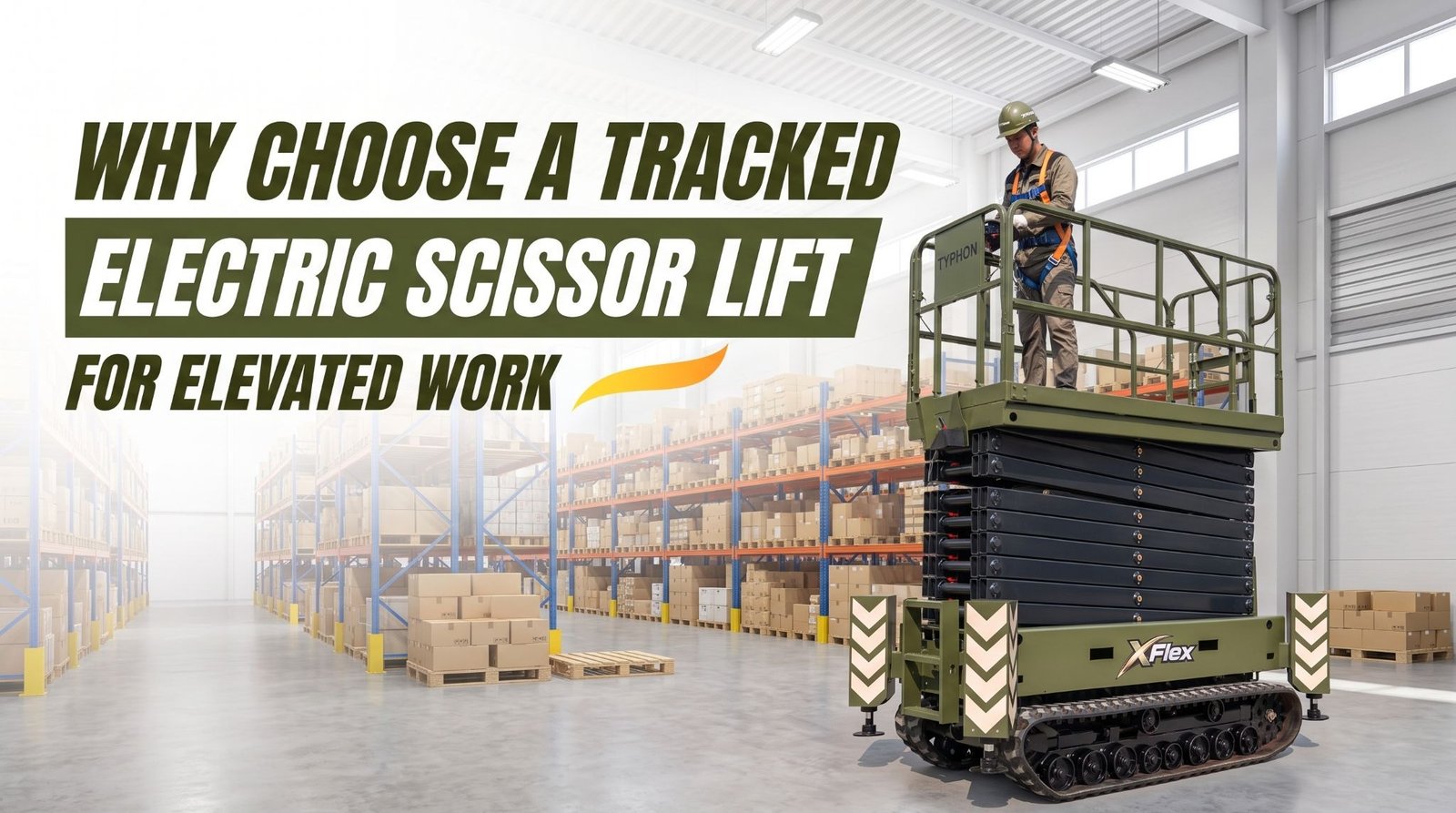
Why Choose a Tracked Electric Scissor Lift for Elevated Work
Some job sites punish a machine long before its platform ever rises. Soft turf gives way under weight, freshly poured surfaces refuse hard tires, and rutted ground turns a routine reposition into a careful negotiation. On sites like these, a standard electric scissor lift on wheels can spin, sink, or scar the surface it was meant to protect. A tracked electric scissor lift answers that challenge by trading wheels for rubber tracks, spreading the machine’s weight across a far larger footprint and pairing that footing with quiet, emission-free electric power. The result is a lift that reaches height confidently on ground that would defeat a wheeled unit, without giving up the clean, indoor-friendly operation electric machines are prized for.
Choosing this configuration matters because the surface underneath a lift shapes everything that happens above it. A machine that stays planted, moves without tearing the ground, and works cleanly indoors or out lets crews reach height where and when the job demands rather than waiting for perfect conditions. This post explains how rubber tracks improve traction and stability, how electric power serves indoor and low-emission sites, how tracked models stack up against wheeled electric lifts, how the track system supports stability at height, how gradeability and terrain handling differ, and how to match a tracked electric scissor lift to your real work before you buy.
How Rubber Tracks Improve Traction and Stability on Difficult Surfaces
The defining advantage of a tracked scissor lift is the way it meets the ground. Instead of concentrating the machine’s weight on a handful of small tire contact patches, rubber tracks lay that weight down along two long, broad bands. This spreads the load over a much larger area, which lowers ground pressure dramatically. On soft turf, loose gravel, sand, or damp soil, that reduced pressure is what keeps the machine floating across the surface rather than digging in and sinking. A wheeled lift concentrating its mass on narrow tires can bog down in exactly the conditions a tracked unit crosses with ease.
Traction improves for the same reason the machine stays afloat. The long track surface grips loose and slick ground far better than a smooth or lightly treaded tire, so the lift pulls itself forward steadily instead of spinning in place. That grip also protects sensitive surfaces, because tracks distribute their pull gently rather than tearing at the ground the way a spinning wheel does. On finished lawns, turf that must survive the job, or delicate flooring, the low, even contact of rubber tracks leaves far less mark than concentrated tire loads. Uneven ground benefits too, since the long track bridges small dips and ruts, keeping the machine steadier where a wheel would drop into every hollow.
Key takeaway: Rubber tracks spread the machine’s weight across a large footprint, lowering ground pressure to prevent sinking, improving grip on loose surfaces, and protecting sensitive ground where wheeled lifts would dig in or tear.
How Electric Power Serves Indoor and Low-Emission Job Sites
Pairing tracks with electric power extends the machine’s usefulness into places engine-driven equipment simply cannot go. An electric scissor lift produces no exhaust and runs far more quietly than a combustion machine, which makes it well suited to enclosed and sensitive environments. Indoors, where exhaust fumes would pose a health hazard and demand ventilation, an electric lift works cleanly with no emissions to manage. In occupied buildings, hospitals, schools, retail spaces, and warehouses, the low noise keeps the machine from disrupting the people and activity around it, letting elevated work proceed during ordinary hours rather than only after everyone leaves.
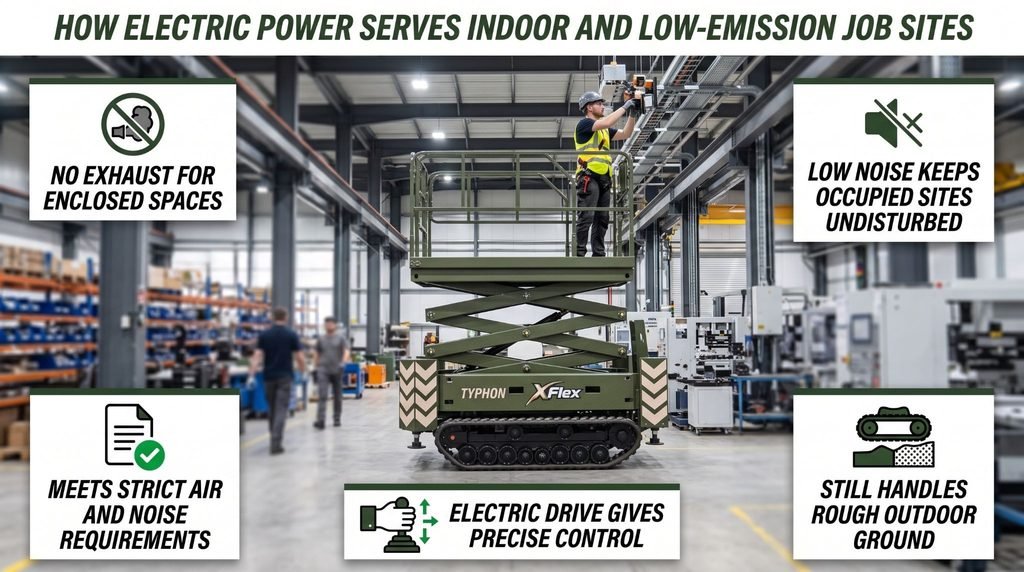
The low-emission advantage reaches outdoor work as well. Many sites now carry strict requirements around air quality and noise, whether to meet regulations, satisfy a client, or work near residents who won’t tolerate a roaring engine. An electric tracked lift meets those demands while still handling the rough ground its tracks are built for, bridging a gap that once forced a choice between clean operation and off-road capability. Electric drive also brings smooth, precise control that suits the careful positioning elevated work requires, and it spares operators the vibration, heat, and fumes of an engine at close quarters. For crews moving between indoor tasks and demanding outdoor ground, one electric tracked machine can serve both without compromise.
Key takeaway: Electric power lets a tracked scissor lift work cleanly and quietly indoors and on emission-restricted sites, combining zero exhaust and low noise with the rough-ground capability tracks provide.
How Tracked Models Compare to Wheeled Electric Scissor Lifts
Setting a tracked electric scissor lift beside a wheeled one makes the trade-offs clear. A wheeled electric lift is the right tool for firm, level, finished surfaces. On smooth warehouse floors, paved lots, and hard indoor flooring, wheels roll efficiently, move quickly, turn tightly, and cost less to buy and maintain. For operations that never leave good ground, a wheeled machine delivers everything the job needs at a lower price, and its simpler drive system is easier to service over the years.
The comparison shifts the moment the ground turns soft, loose, or uneven. A wheeled lift concentrates its weight on small contact patches, so it sinks into turf, spins on loose fill, and struggles across ruts that a tracked machine handles without pause. Where a wheeled unit would leave marks in a finished lawn or bog down in mud, the tracked lift spreads its load and keeps moving. That capability comes at a cost: tracked machines generally carry a higher purchase price, move somewhat more slowly, and involve a drive system with more components to maintain. The sensible way to choose is to look honestly at the worst ground the lift must cross regularly. If your work stays on firm, level surfaces, a wheeled electric lift serves well and saves money. If soft, sensitive, or uneven ground is a routine part of the job, the tracked machine earns its premium by reaching height where the wheeled unit cannot.
Key takeaway: Wheeled electric lifts are faster and cheaper for firm, level surfaces, while tracked models justify their higher cost on soft, sensitive, or uneven ground, so match the choice to the toughest ground you cross regularly.
How the Track System Supports Stability at Height
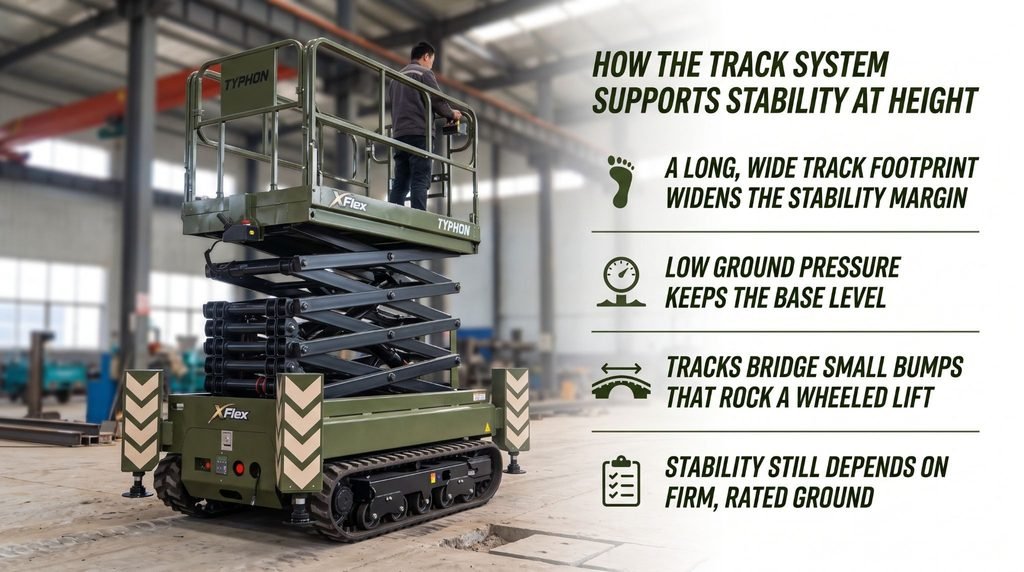
Every scissor lift depends on a stable base to work safely at height, and the track system contributes to that stability in ways a wheeled undercarriage cannot match. Because the tracks plant a long, wide footprint on the ground, they give the raised platform a broad, planted foundation to work from. A wider, longer base sits farther from the tipping point in every direction, so the machine holds a more generous stability margin as the platform climbs. The low ground pressure that keeps the lift from sinking also matters here, because a machine resting evenly on firm footing stays level, and a level base is the foundation every elevated task relies on.
The tracks also steady the machine against the small irregularities that undermine stability at height. On slightly uneven ground, a wheeled lift can rock or tilt as individual tires ride over bumps and into hollows, and any tilt at the base is magnified at the top of a raised platform. The long track bridges those irregularities, keeping contact consistent and the platform steadier through the reach of the lift. This steadiness is not a substitute for working on firm, level ground within the machine’s rated limits, which every scissor lift requires, but it does give the tracked unit a more forgiving, planted feel on the imperfect surfaces real job sites present. A stable base, in the end, is what lets crews work at height with confidence.
Key takeaway: The long, wide track footprint gives the raised platform a broad, level foundation that holds a wider stability margin and bridges ground irregularities, keeping the machine steadier at height than a wheeled base on imperfect surfaces.
How Gradeability and Terrain Handling Differ From Wheeled Units
Terrain that challenges a wheeled electric lift is where a tracked machine shows its true character. Gradeability, the incline a machine can climb, tends to be stronger on a tracked unit because the tracks grip the surface along their full length rather than relying on a few tire contact points. Climbing a slope on loose or damp ground asks the drive system to haul the whole machine against gravity without slipping, and the broad, gripping track holds its footing where a wheel would spin and stall. This lets a tracked lift tackle graded approaches, ramps, and sloped sites that would leave a wheeled electric machine struggling for traction partway up.
Terrain handling more broadly follows the same pattern. Job sites rarely offer uniform ground, and a lift may cross soft fill, rutted earth, gravel, and grass within a single task. A tracked machine adapts to those changes far better, keeping traction and a steady stance as the surface shifts underfoot, while a wheeled unit is at the mercy of whatever grip each tire can find. The tracks also carry the machine over obstacles, curbs, thresholds, and small debris more smoothly, and their greater ground clearance in rough-terrain designs keeps the undercarriage clear of the surface. As with any lift, elevating the platform still calls for firm, level ground, and driving on a slope is governed by the machine’s ratings and safety limits. But when it comes to reaching the work across demanding terrain, a tracked electric lift moves confidently where a wheeled one would have to stop.
Key takeaway: Tracked electric lifts climb steeper grades and cross rough, shifting terrain more capably than wheeled units, because the long gripping track holds traction on loose and sloped ground where tires spin and stall.
Conclusion
A tracked electric scissor lift answers a problem that trips up so much elevated work: reaching height safely on ground that a wheeled machine cannot handle, without giving up clean, quiet operation. Rubber tracks spread the machine’s weight to keep it from sinking, grip loose and slick surfaces, and protect sensitive ground, while electric power lets that same machine work cleanly indoors and on emission-restricted sites. The long track footprint gives the raised platform a broad, level base that holds its stability at height and bridges the irregularities of real terrain, and stronger gradeability lets the lift climb slopes and cross rough ground where a wheeled unit would stall. Match the machine to the hardest conditions you routinely face, operate it within its rated limits on firm, level ground when elevated, and a tracked electric scissor lift will reach the work confidently across the full range of sites your crews encounter.
Frequently Asked Questions
When is a tracked electric scissor lift a better choice than a wheeled one?
A tracked model is better when the job regularly involves soft turf, mud, loose gravel, sand, or uneven terrain. Rubber tracks spread the machine’s weight over a larger contact area, reducing sinking and improving traction on difficult ground. They can also be gentler on sensitive surfaces such as lawns. On firm, level floors, a wheeled electric lift is usually faster and more economical. Base the choice on the toughest terrain you routinely encounter.
Can a tracked electric scissor lift be used both indoors and outdoors?
In many cases, yes, depending on the machine’s ratings. Electric power provides quiet, exhaust-free operation for indoor spaces, while rubber tracks offer better traction and lower ground pressure outdoors. This allows one machine to handle both indoor work and softer or uneven outdoor terrain. Always confirm the model’s outdoor rating, wind limits, weather protection, and surface requirements before switching between environments.
Does a tracked base make an electric scissor lift more stable at height?
Tracks can improve stability by providing a longer, wider footprint and more even ground contact. They also help the machine stay planted over minor dips and uneven surfaces that may make a wheeled lift rock or tilt. However, tracks do not replace the need for firm, level ground and compliance with slope, wind, and platform limits. They provide a more stable base, but safe operation still depends on the machine’s rated conditions.